The Use of Weighted Ball Throwing Programs in Youth Baseball: A Critical Review
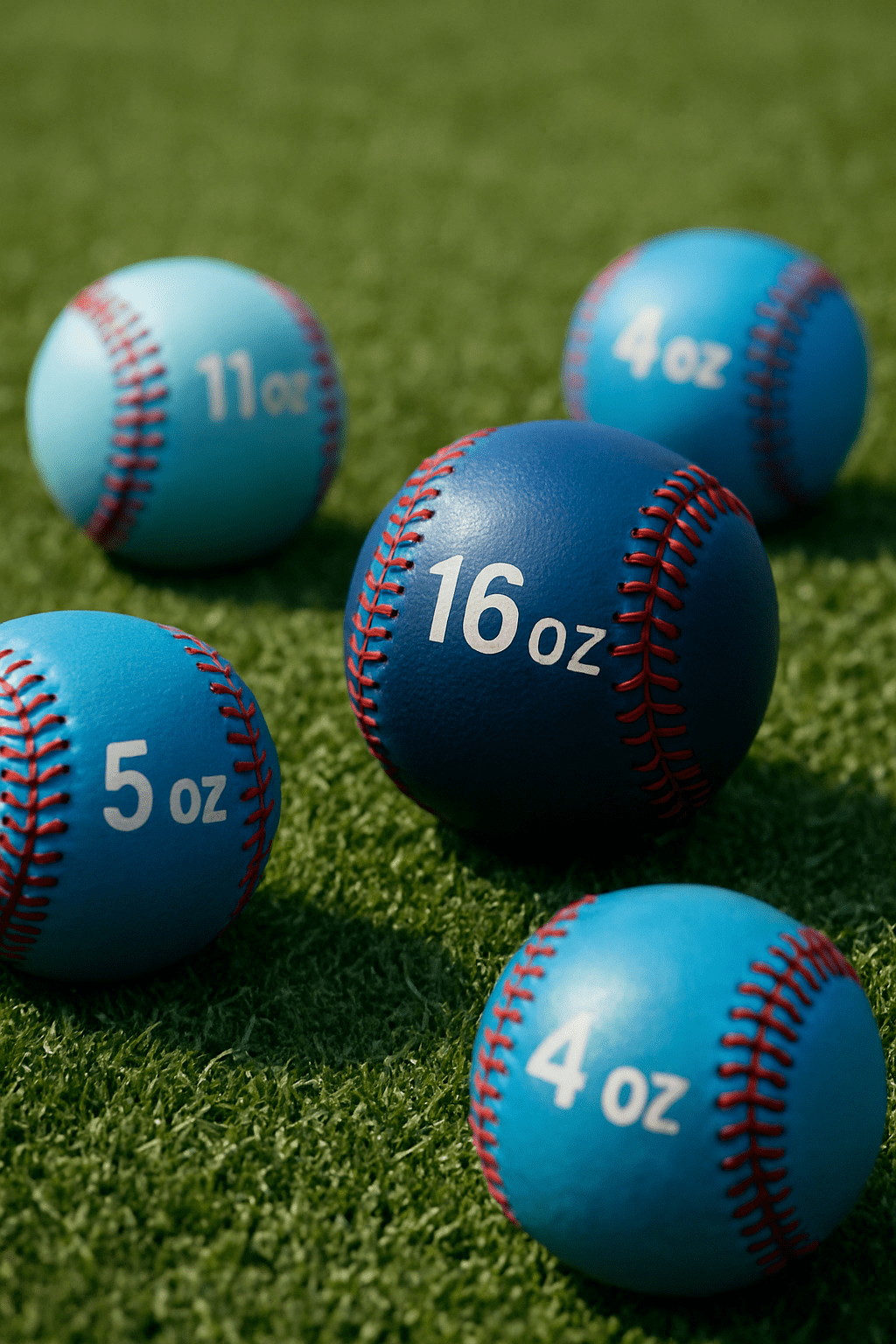
In recent years, the pursuit of increased pitching velocity has led to a rise in the popularity of velocity-enhancing programs among youth baseball players. Among the most common are weighted ball throwing programs, which involve the use of both underweight (less than 5 oz) and overweight (more than 5 oz) baseballs. These programs are often promoted as a means to improve arm strength, increase arm speed, refine mechanics, and ultimately enhance throwing velocity and pitch command.
While weighted ball training has existed since the 1970s, its use has surged at both the professional and youth levels. Typical programs incorporate throws with balls ranging from 2 oz to as heavy as 32 oz over several weeks. However, despite widespread adoption, there remains limited evidence on the safety and effectiveness of these programs in youth athletes.
Do Weighted Ball Programs Increase Velocity?
The general consensus suggests that weighted ball programs can increase pitching velocity, but the evidence is far from conclusive.
In one 6-week prospective study involving high school pitchers, participants in the weighted ball group increased their average velocity by 3.3% (approximately 2.2 mph). However, 8% of participants saw no change in velocity, and 12% experienced a decrease. Notably, 67% of the control group—who trained exclusively with standard 5 oz baseballs—also increased their velocity. Within that group, 19% showed no change and 14% decreased.
A similar 6-week study by Marsh et al. involving collegiate and professional pitchers showed no change in velocity. Additionally, a meta-analysis by Caldwell et al. reported multiple studies with no statistically significant velocity improvements from weighted ball training.
These mixed results indicate that while some young athletes may benefit from modest gains in velocity, others may see no change or even regression. Furthermore, older and more advanced athletes appear less likely to benefit. It’s also worth noting that participants in the initial study were allowed to continue strength and conditioning routines—specifically targeting the external rotators of the shoulder—which are known to independently enhance pitching performance. This makes it difficult to isolate the effects of the weighted ball program alone.
Are There Risks?
Yes—significant ones.
In the same 6-week study cited above, the injury rate among the weighted ball group was 24%. Injuries included olecranon stress fractures, partial UCL tears, and a complete UCL injury that led one player to retire from baseball rather than undergo surgery. Importantly, none of the athletes in the control group sustained injuries during the training period or the following season.
One of the most notable physical changes observed in weighted ball programs is a rapid increase in shoulder external rotation. While increased external rotation can contribute to improved velocity, it also introduces substantially greater stress on the shoulder and elbow—factors strongly associated with throwing-related injuries.
In one study, just 27 submaximal throws with balls weighing 16–32 oz produced an 8-degree increase in passive shoulder external rotation. To compare, professional pitchers completing 45-pitch mound sessions at full intensity showed no such change. Even more striking, research shows that youth pitchers typically gain only 5 degrees of external rotation over the course of an entire 8-month season—yet weighted ball programs can induce the same change in just six weeks. This abrupt biomechanical shift may be a major contributing factor in overuse and structural injuries.
Moreover, research by Wilk et al. found that 78% of pitching injuries occur in athletes with excessive rotational range of motion. Notably, two of the injured participants in the weighted ball study showed the highest increases in external rotation—10 and 11 degrees, respectively.
Contrary to popular claims, these programs have not been shown to improve arm strength, arm speed, or shoulder strength. Rather, the velocity gains seem primarily due to increased external rotation—beneficial for performance but detrimental to joint stability, particularly in skeletally immature athletes.
Summary and Clinical Takeaways
The available evidence suggests the following:
• Weighted ball programs may produce modest velocity gains in some youth athletes.
• They can also lead to no improvement—or even decreased velocity—for others.
• They do not reliably improve arm strength or speed.
• They are associated with a significantly elevated injury risk—both during and after training.
• They rapidly increase shoulder external rotation, a known risk factor for arm and elbow injury.
• Youth athletes, especially those who are still growing, are at highest risk.
The small, inconsistent performance gains do not outweigh the substantial risk of injury for developing athletes. Furthermore, much of the observed velocity improvement in young players may stem from natural physical development, not the weighted ball training itself.
While there may be a role for carefully monitored weighted ball programs in mature, professional athletes under expert supervision, their use in youth baseball is difficult to justify.
Conclusion:
Weighted ball training is not a magic solution for velocity enhancement and carries considerable injury risk, particularly for young, developing athletes. In my professional opinion, the potential reward does not outweigh the very real risks. Any use of such programs should only be in adult athletes and be approached with caution, and only in highly individualized, medically supervised settings—if at all.
References:
- Reinold MM, Macrina LC, Fleisig GS, Aune K, Andrews JR. Effect of a 6-Week Weighted Baseball Throwing Program on Pitch Velocity, Pitching Arm Biomechanics, Passive Range of Motion, and Injury Rates. Sports Health. 2018;10(4):327-333. doi:10.1177/1941738118779909
- Marsh JA, Wagshol MI, Boddy KJ, et al. Effects of a six-week weighted-implement throwing program on baseball pitching velocity, kinematics, arm stress, and arm range of motion. PeerJ. 2018;6:e6003. doi:10.7717/peerj.6003
- Caldwell JE, Alexander FJ, Ahmad CS. Weighted-Ball Velocity Enhancement Programs for Baseball Pitchers: A Systematic Review. Orthop J Sports Med. 2019;7(2):2325967118825469. doi:10.1177/2325967118825469
- Wilk KE, Macrina LC, Fleisig GS, et al. Correlation of glenohumeral internal rotation deficit and total rotational motion to shoulder injuries in professional baseball pitchers. Am J Sports Med. 2011;39:329-335.
 Sideline Science
Leave a comment